October 15, 2025
What is Hijama?

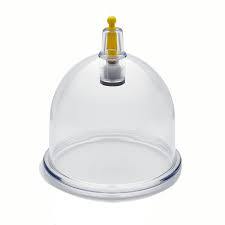
Hijama is the Islamic practice of cupping. Cups are placed on the skin and suction draws the skin up into them; in wet cupping, the form kept in the Sunnah, a few small, shallow scratches are made and the cups go back on. Muslims keep it because the Prophet ﷺ was cupped himself, paid the man who cupped him, and named cupping among the best of the remedies people use.
That is the whole answer in three sentences. The rest of this page is the detail: where the word comes from, what the sahih narrations actually say, what happens in a session, how wet and dry cupping differ, and what to look for in the person you go to. It is long because the question is asked in so many different ways, and most of them deserve a straight answer.
The short answer
- What it is: cupping by suction, usually on the upper back, shoulders and neck.
- Wet or dry: dry cupping is suction only. Wet cupping, which is what most people mean by hijama, adds a few small, shallow scratches between two rounds of suction.
- Why Muslims keep it: it is a Sunnah. The narrations are in Sahih al-Bukhari and Sahih Muslim, and they are quoted below with their references.
- What it is not: a treatment for a named condition, or a substitute for medical care.
- How often: for most people, once every three months.
What does the word hijama mean?
Hijama (حجامة) comes from the Arabic root ح ج م, whose basic sense is to suck, or to draw. The classical dictionaries give the root's first meaning as a child sucking at the breast, and explain that the cupper was named from it because, for most of history, he drew the suction of the cup by mouth. The person who does it is a hajjam (حجّام), the doubled form Arabic uses for a trade.
So the word names an action, drawing by suction, and nothing else. It does not name an organ, a condition or a result. Today the cups are clear and the suction comes from a small hand pump, but the name stayed, because drawing is still exactly what the cups do. In Urdu it is حجامہ. In English you will see it called Islamic cupping, prophetic cupping or wet cupping.
What the sahih hadith say
This is the part where most writing about hijama goes wrong. Online you will find long lists of narrations, many of them weak or of uncertain origin, and often with a promise attached that the text itself does not make. We quote only narrations recorded in Sahih al-Bukhari and Sahih Muslim, and we quote them as religious text, not as a promise of any result.
The best of remedies. Anas ibn Malik was asked about the wages of the one who does cupping. He said that the Messenger of Allah ﷺ was cupped by Abu Taybah, who was given two measures of food, and the Prophet ﷺ spoke to Abu Taybah's masters so that his dues were lightened. And he ﷺ said: "The best of the remedies you use is cupping." Sahih al-Bukhari 5696; Sahih Muslim 1577.
Three things. Ibn Abbas reported that the Prophet ﷺ said that healing is in three things: a drink of honey, the cut of the cupping blade, and cauterisation with fire, "and I forbid my ummah from cauterisation." Sahih al-Bukhari 5680, 5681.
If there is any good. Jabir ibn Abdullah reported that the Prophet ﷺ said: "If there is any good in your remedies, it is in the cut of the cupping glass, a drink of honey, or cauterisation that suits the ailment, and I do not like to be cauterised." Sahih Muslim 2205.
He was cupped while in ihram, and while fasting. Ibn Abbas reported that the Prophet ﷺ was cupped while he was in ihram, and was cupped while he was fasting. Sahih al-Bukhari 1938.
Read together, they say something simple. The Prophet ﷺ did not only speak well of cupping; he had it done, more than once, and he paid the person who did it. Hijama was a practice to him, and a paid craft done by someone with a skill. The wording is also careful. If there is any good. Among the remedies you use. These narrations place cupping among the ordinary means people take, the way one would speak of honey, and they leave the outcome with Allah.
What is traditional rather than textual
A good deal of what circulates about hijama is custom, not text. Lists of particular days to choose or avoid, charts that match points on the body to illnesses, and longer narrations promising that cupping answers every ailment mostly come from narrations that scholars grade weak, or from no narration at all. Some of it is old and sincerely held, and some of it is simply marketing. We do not build anything on it, and we would rather say so plainly than repeat it. If a question about timing or practice matters to you religiously, ask your imam or a scholar you trust. We have a fuller page on hijama in the hadith, with each narration and its reference.
A practice with a long history
Cupping is older than Islam and was known across the ancient world. What the Sunnah did was keep it, in a particular form, as something a Muslim may choose to do with intention. The physicians of the Islamic golden age wrote about cupping in their medical works, and it stayed an ordinary part of life in many Muslim communities for centuries.
Then, for a lot of families, it quietly dropped away. Plenty of people reading this grew up without anyone around them having it done, and only came across it as adults, through a friend, a lecture or a photograph of round marks on someone's back. Part of what we do is simply bring it back into ordinary reach, done carefully, close to home.
Wet cupping and dry cupping
There are two kinds of cupping, and the difference is easy to state.
Dry cupping is suction only. The cups go on, the skin draws up inside them, nothing is opened and nothing is scratched. It is the gentler of the two, and it is where some people start when the scratch is the thing holding them back.
Wet cupping begins the same way. After a short time the cups come off, a few small, shallow scratches are made on the lifted skin, and the cups go back on over them. This is the form that has been kept in the Sunnah, and it is what most people are looking for when they search for hijama.
Both leave round marks, and for the same reason: the suction, not the scratch. Neither is a step you have to work up to. Some people only ever have dry cupping, and that is a perfectly good choice. There is a full comparison of wet and dry cupping if you are deciding between them, and a note on how hijama differs from the sports cupping you may have seen on athletes.
What happens in a session
A session has a simple shape.
- Questions first. Before anything is opened, you answer screening questions: anything you take, whether you are pregnant or on your period, anything that has changed since last time. This decides whether the session goes ahead today and how. Sometimes the honest answer is not today, or speak to your doctor first.
- You lie down. Only the area being cupped is uncovered, most often the upper back, shoulders and back of the neck. Where the cups go is the practitioner's decision on the day, after the questions, not a map anyone can promise you in advance.
- Suction. The cups go on and the skin lifts into them. It is a firm, steady pull, and it is painless.
- The scratch, for wet cupping. The cups come off, a few small, shallow scratches are made, and the cups go back on.
- Finish and aftercare. The cups come off, the skin is cleaned and covered, and you are told what to expect over the next few days. Then you walk back out on your own.
At our practice a session is about an hour and a half for brothers and about two hours for sisters, which leaves room for the questions and for nobody to feel hurried. You can read what a first session is like, step by step, and how to prepare for hijama the day before.
Does hijama hurt?
This is the question underneath most of the others, and it deserves a straight answer: a firm pinch, then steady pressure, then it is over.
The suction is not painful; most people relax into it. The scratch is made on skin that the suction has already left slightly numb. It is small, shallow and quick, closer to a cat's scratch than to whatever you are picturing, and it takes a matter of seconds. Afterwards there is some tenderness over the spots, the way a bruise is tender, and it fades over the following days. The fear of it usually lasts longer than the thing itself. The honest version, in full.
The marks are round, deep red on the first day, browner and flatter by about the fourth, and for most people hard to find by around the tenth. They are what suction does to skin, not a wound. How long hijama marks last.
What hijama is not
We are careful here, and we think you should be careful with anyone who is not.
Hijama, as we offer it, is a traditional and Sunnah practice. It is not a treatment for a named condition, and we do not promise any health result from it, on any part of the body, for any person. Research on cupping exists, but it is limited and mixed, and none of it turns a Sunnah practice into a medical procedure. If someone hands you a list of illnesses hijama will fix, with a hadith underneath for authority, they have added something the sources do not say.
What many people do describe, in their own words, is that the session is calm, that it feels like an act of following the Sunnah, and that they come away rested. That is their experience to describe, and we leave it as theirs.
And hijama never replaces medical care. If you are on medication, pregnant, have a health condition, or are unsure for any reason, speak to your doctor first and say so at intake.
Intention
The part of hijama that is easiest to overlook is not the cup but the niyyah, the intention. Muslims who choose hijama usually do so as an act of following the Sunnah, with the belief that shifā', healing, comes from Allah alone, and that the means we take are only means.
That is why we keep the room quiet, the conversation unhurried and the session free of promises. A Sunnah practice is still done on a real body, by a real person, and it deserves both care and honesty.
How often should you have hijama?
For most people, once every three months is a good rhythm: four sessions a year, evenly spaced. Where there is a particular reason to come more often, we suggest monthly for three months, and then back to once a quarter. Nothing more complicated than that. Why once a quarter.
Choosing where to go
Hijama is as safe as the hands doing it and the equipment they open. The practice is simple; the risk, where there is any, sits almost entirely in hygiene. Ask anywhere you go:
- Is every cup and every blade single-use? You want a plain yes, not an explanation of how well things are cleaned.
- Will you ask me questions before you start? Screening first is a good sign; none at all is not.
- Who will I see? Many people want a practitioner of the same gender, and that is a reasonable thing to ask for.
- What do you promise? The right answer is very little. A long list of guaranteed results is the wrong one.
More on whether hijama is safe and what to ask.
Hijama in Fairfax, Virginia
Hikma Hijama Cupping is inside the HAWA Fairfax Community Center at Fair Lakes, in Fairfax. Sisters are seen by a woman practitioner and brothers by a man, one person at a time, with a sterile single-use kit. Both practitioners hold a hijama practitioner diploma. Wet cupping is $135 and dry cupping is $115, and sessions are by appointment only. You can see the prices, book hijama for women or hijama for men, or go straight to appointments.
Hijama is a traditional practice and is not a substitute for medical care. If you are on medication, pregnant, or unsure for any reason, speak to your doctor first and say so at intake.
Frequently asked questions
Is hijama the same as cupping?
Hijama is a form of cupping. The word usually means wet cupping done as a Sunnah practice: suction, a few small, shallow scratches, then suction again. Cupping on its own often means dry cupping, which is suction only.
Is hijama a Sunnah?
Yes. The Prophet ﷺ was cupped himself, paid the man who cupped him, and named cupping among the best of the remedies people use. These narrations are recorded in Sahih al-Bukhari (5696, 5680, 1938) and Sahih Muslim (1577, 2205).
Does hijama hurt?
A firm pinch, then steady pressure. The suction is painless, and the scratch is small, shallow and over in seconds. There is some tenderness afterwards, like a bruise, which fades over a few days.
What is the difference between wet and dry cupping?
Dry cupping is suction only, with nothing scratched. Wet cupping adds a few small, shallow scratches between two rounds of suction; it is the form kept in the Sunnah. At our Fairfax practice wet cupping is $135 and dry cupping is $115.
How often should you have hijama?
For most people, once every three months. Where there is a particular reason to come more often, we suggest monthly for three months, and then back to once a quarter.
Is hijama safe?
Hijama is as safe as the hands doing it and the equipment they use. Ask whether every cup and blade is single-use, and expect screening questions first. If you are on medication, pregnant, or unsure for any reason, speak to your doctor first.
Can hijama replace medical treatment?
No. Hijama is a traditional and Sunnah practice, not a treatment for a named condition and not a substitute for medical care.