October 2, 2026
How to Prepare for Hijama: The Whole List
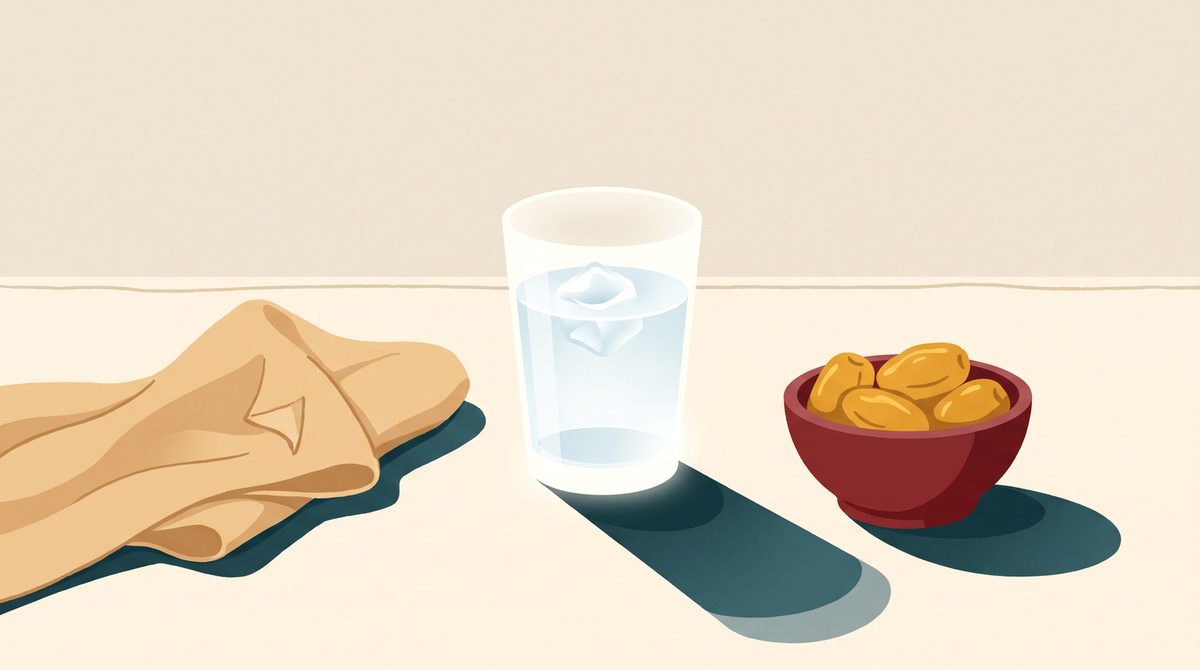
People arrive at their first hijama session having read a great deal and prepared for almost none of it. They know the narrations. They have watched a video they should not have watched. And then, because nobody told them otherwise, they pick something up to eat on the way and lie down twenty minutes later with a full stomach.
The preparation is not complicated. It is just rarely written down in one place.
How to prepare for hijama
No food for two to three hours before the session. Water is fine. Come in a state of wudu, and wear something loose you do not mind creasing. Plan for an hour and a half to two hours, door to door. That is genuinely the whole list, and the food is the part people are least often told.
The list, with the reasoning
- No food for two to three hours before. Water is the exception and you should drink it; it is only food that comes off the list. If your appointment is at one in the afternoon, finish eating by ten or eleven and then stop thinking about it. The one thing worth planning around is the drive, because a sandwich picked up on the way is the version of this that goes wrong most often.
- Come in a state of wudu. This is the item people are most surprised to see on a preparation list, and it is the one that says the most about what hijama is. It is a practice from the Sunnah, not a clinic appointment, and you come to it in the same state you would come to any other part of the Sunnah. If you are arriving straight from the masjid after dhuhr, you are already there.
- Wear something loose. Something you do not mind creasing, and something that moves easily off a shoulder or a back. This is the least glamorous item on the list and the one you will be quietly grateful for.
- Leave time. An hour and a half to two hours, door to door, and a few spare minutes on top so that you are not arriving out of breath.
- Bring your questions. Not to be polite about - actually bring them. Whatever you have been wondering, someone has asked it before and nothing you say will land awkwardly.
What not to bother doing
There is no special regimen, no three-day fast, no list of foods to avoid for a week, no preparation of the skin. If you have read otherwise somewhere, you have read more than we would ask of you.
What matters far more than any of it is the honesty of the conversation before the session starts. Medication, pregnancy, a condition you are being seen for, something that has changed since your last visit - none of that is a detail to mention afterwards. It is the thing the session is planned around, and it is the one part of the preparation that only you can do.
The rest of the day
Afterwards there is a tenderness across the spots for a few days, the way a bruise is tender. Most people drive themselves home and carry on with their evening at a lower gear than usual.
Roughly two hours after every session a message goes out with the aftercare points for that day. We would rather you read them there than here, and we will not paraphrase them into a blog post - the message is the authority, it arrives while the session is still fresh, and a summary written weeks in advance is exactly the kind of thing that drifts out of date without anyone noticing.
So: keep your phone near you that evening, read the message when it comes, and do what it says.
Booking, briefly
Two practical notes so that the day itself is not the first time you meet them.
- Sisters are seen by a woman practitioner and brothers by a man, and each lane has its own windows and its own calendar.
- The calendar likes about a day's notice, so choose your slot the day before rather than the morning of.
One last thing about the frame
None of this is a wellness protocol and we would not want it read as one. Hijama is a practice from the Sunnah, kept by Muslims for a very long time, and offered here to Muslims carefully. The reason we write out a list this ordinary - leave the food for a few hours, make wudu, wear the loose shirt - is that the practice deserves to be approached in a settled state rather than a nervous one, and most of the nervousness people bring is simply the result of nobody having told them what to do beforehand.
Hijama is a traditional practice and is not a substitute for medical care. Speak to your doctor about anything that concerns you, and say so at intake.
If you want the walk-through of the session itself, read what happens during hijama. Both calendars are at hikmahealing.art/appointments.